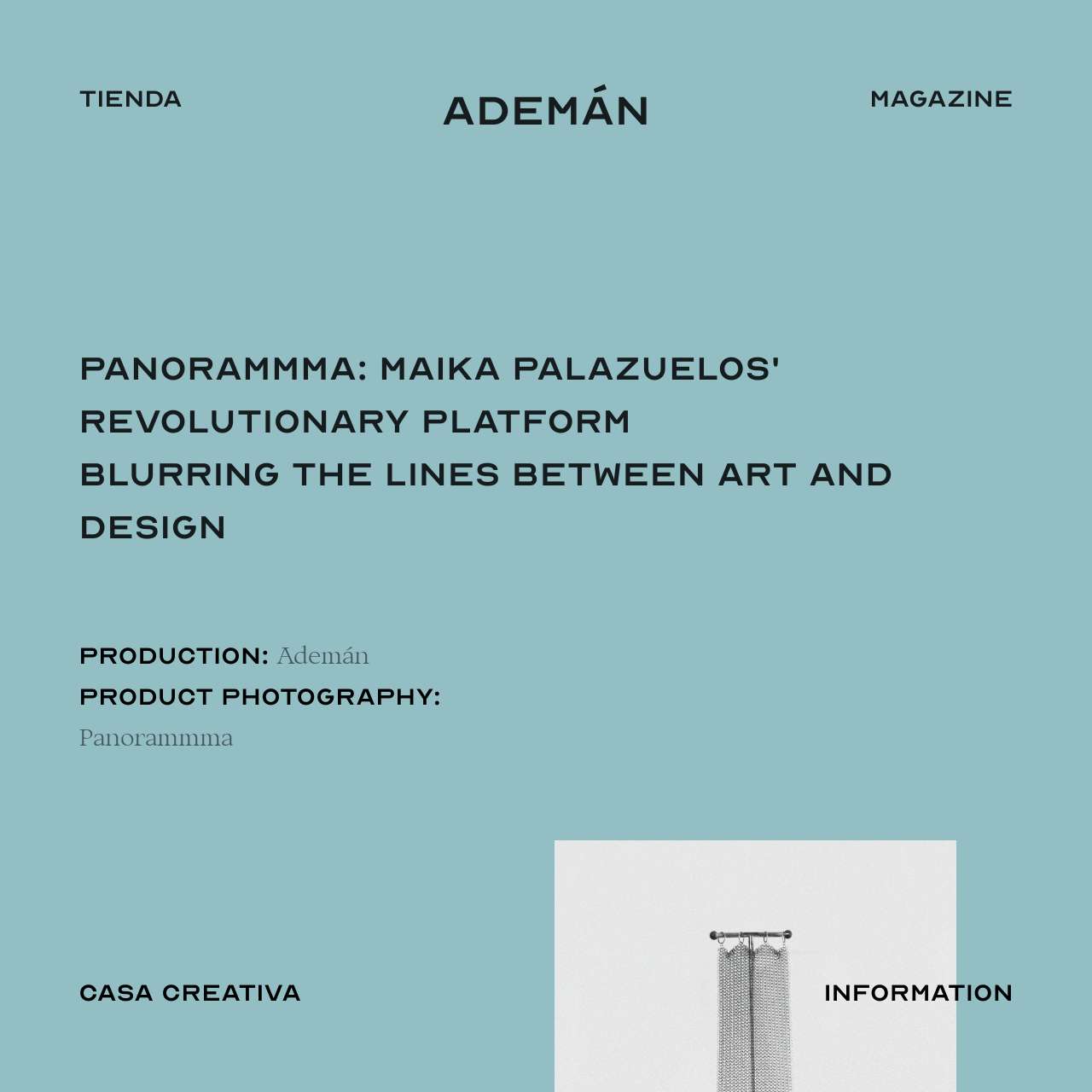
Panorammma: Maika Palazuelos' Revolutionary Platform
Blurring the Lines between Art and Design
In the midst of confinement, Maika Palazuelos (Monterrey, Mexico) found herself pondering the intersection of art and design. The result of her musings is Panorammma, a platform that inserts expressive domestic objects into our daily routines, creating a space for design exploration. Palazuelos refers to these objects as Trojan horses, delivering artistic discourse to the masses by reframing the mundane and disrupting our everyday narrative.
At the heart of Panorammma's designs are themes that speak to the human experience, including the alienation of everyday life, the expanding pathology of the concrete, and the role of abstraction in the social sphere. By exploring past visions of the future and creating the myth of memory, Panorammma builds on our personal experiences through new visual narratives. Users are encouraged to take an active role in their surroundings, interacting with the objects in meaningful ways.
Palazuelos's approach to design is dynamic, emphasizing the potential for serendipitous experiences. Through Panorammma, she blurs the lines between art and everyday objects, offering a glimpse into the transformative power of design. It's a testament to her innovative spirit and her ability to reimagine the way
we live and interact with the world around us.
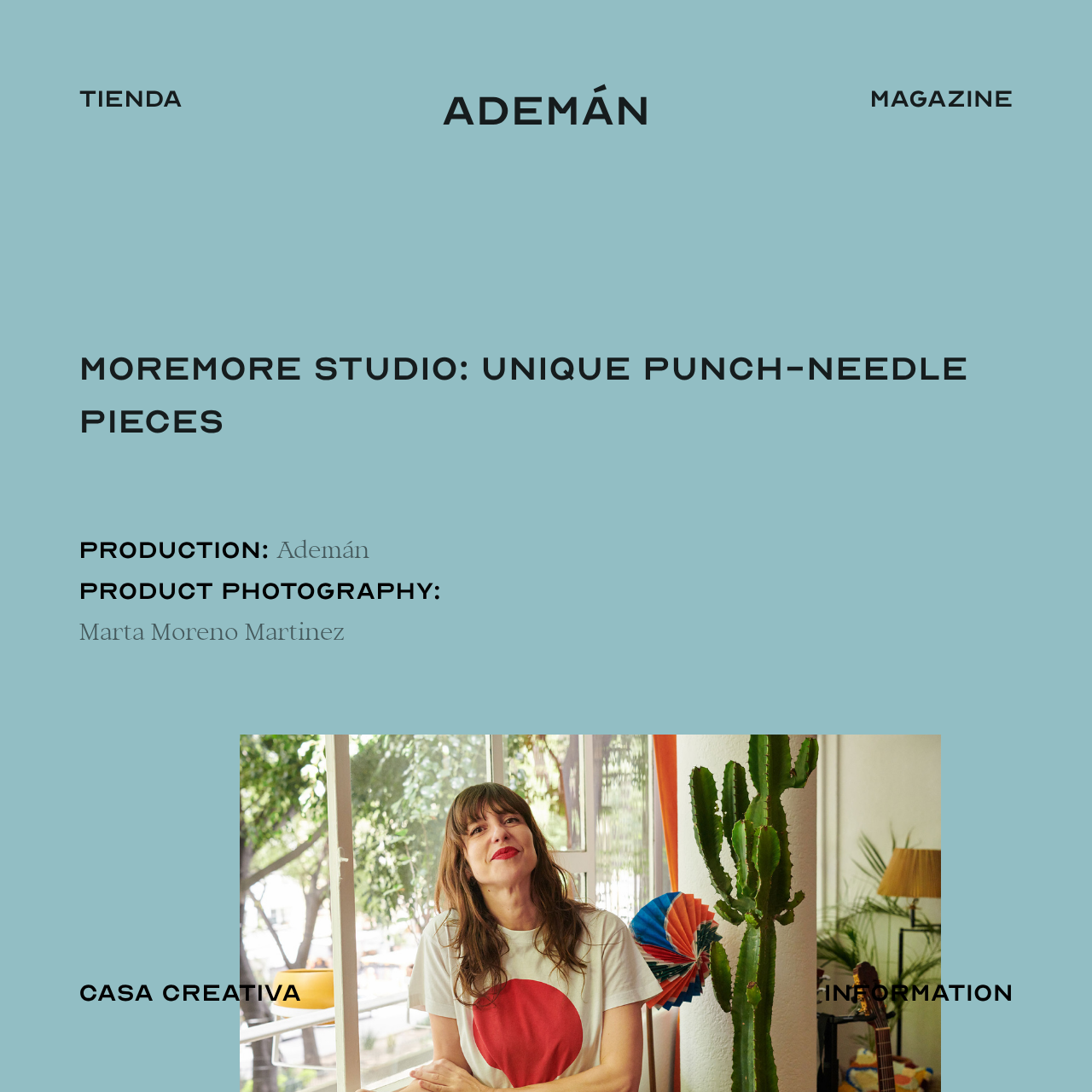
MoreMore studio: unique punch-needle pieces
Marta Moreno Martinez is originally from Andalusia, Spain, and has made a name for herself in the world of design and art, both in her home country and abroad. She currently resides in Mexico City and is the founder of MoreMore Studio, where she specializes in needle felting techniques.
For those unfamiliar with needle felting, it is an ancient technique that involves threading fibers through the holes of a specific fabric, one stitch at a time. The result is a dense and textured fabric that can be used for a variety of decorative purposes, from rugs and cushions to tapestries and even portraits.
Marta's work is a beautiful abstraction of nature, with a focus on shapes, volumes, textures, colors, and reliefs. Her meticulous attention to detail is evident in every intricate and bold design she creates.
As a designer, color is a critical element in Marta's work. She has a unique perspective on color, seeing it as a means to express emotions and sensations.
It is clear that Marta's education has played a significant role in shaping her as a designer. She comes from a family where art and design were a way of life, and it's no surprise that she has continued in this tradition.
Marta is a shining example of a successful artist who has stayed true to her roots. Her dynamic personality permeates her unique style, and MoreMore studio is a reflection of her exceptional talent and innovative spirit.
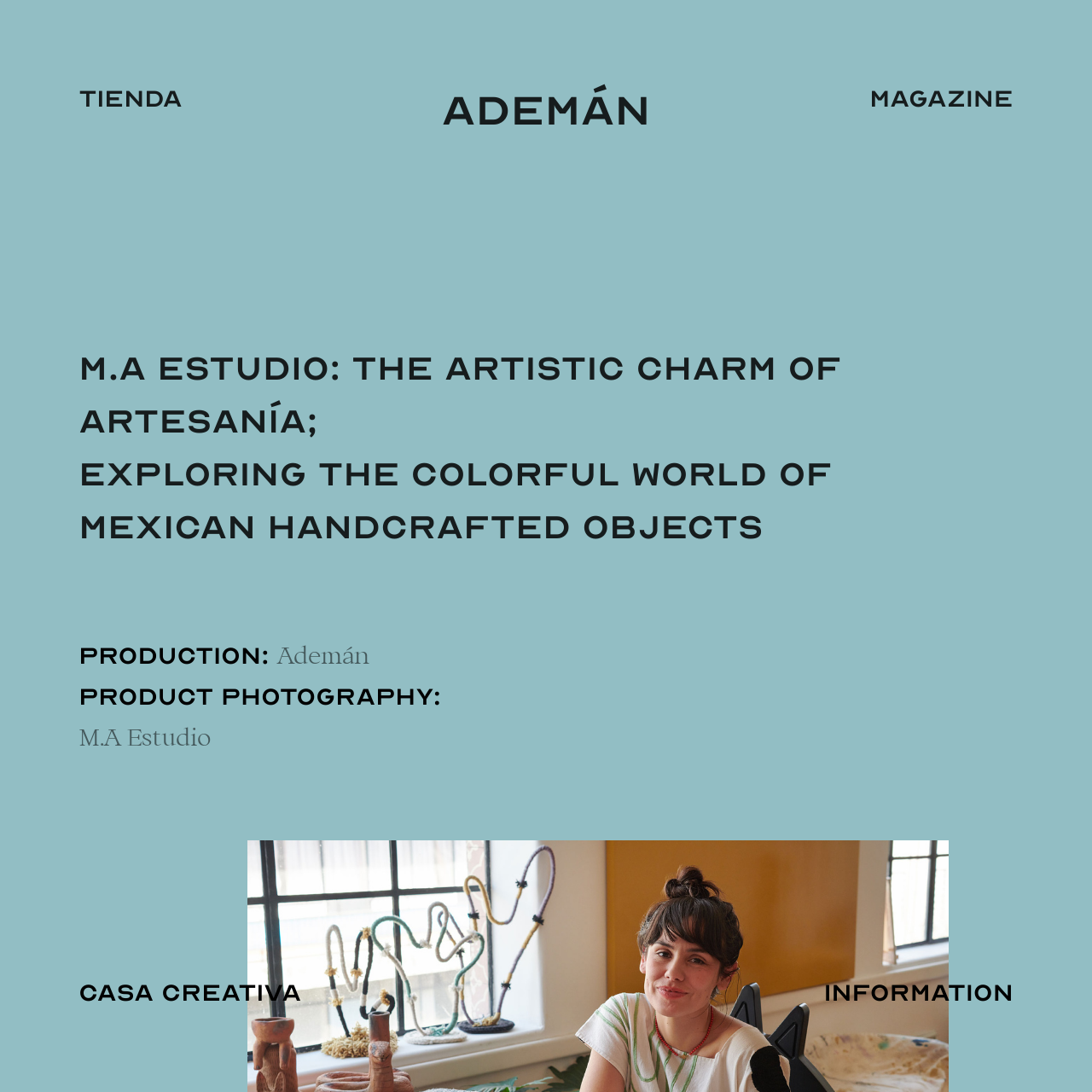
M.A estudio: The Artistic Charm of Artesanía;
Exploring the Colorful World of Mexican Handcrafted Objects
Melissa, a multidisciplinary artist from Tijuana, Mexico, has taken a unique approach to her art by combining her artistic production with traditional artisanal techniques. Her project aims to establish relationships that expand and activate creative fields and work methods based on tradition, local knowledge, and the intersection of personal and collaborative work.
In pursuing her passion for art, Melissa has recognized the importance of preserving traditional
craftsmanship and creating opportunities for artisans using fair and horizontal manufacturing practices. She has taken a hands-on approach to this goal by creating unique handmade pieces alongside artisans who specialize in different ancestral processes. This approach not only helps preserve these traditional techniques but also creates opportunities for income and employment for the native communities of Mexico.
Melissa's project is not only focused on preserving and promoting traditional craftsmanship but also aims to share and strengthen local practices and knowledge. She is interested in capacitating new artisans and providing them with opportunities to learn and grow. Through this project, Melissa hopes to create a bridge to the native communities of Mexico and help them sustain their traditions while building a better future for them selves.
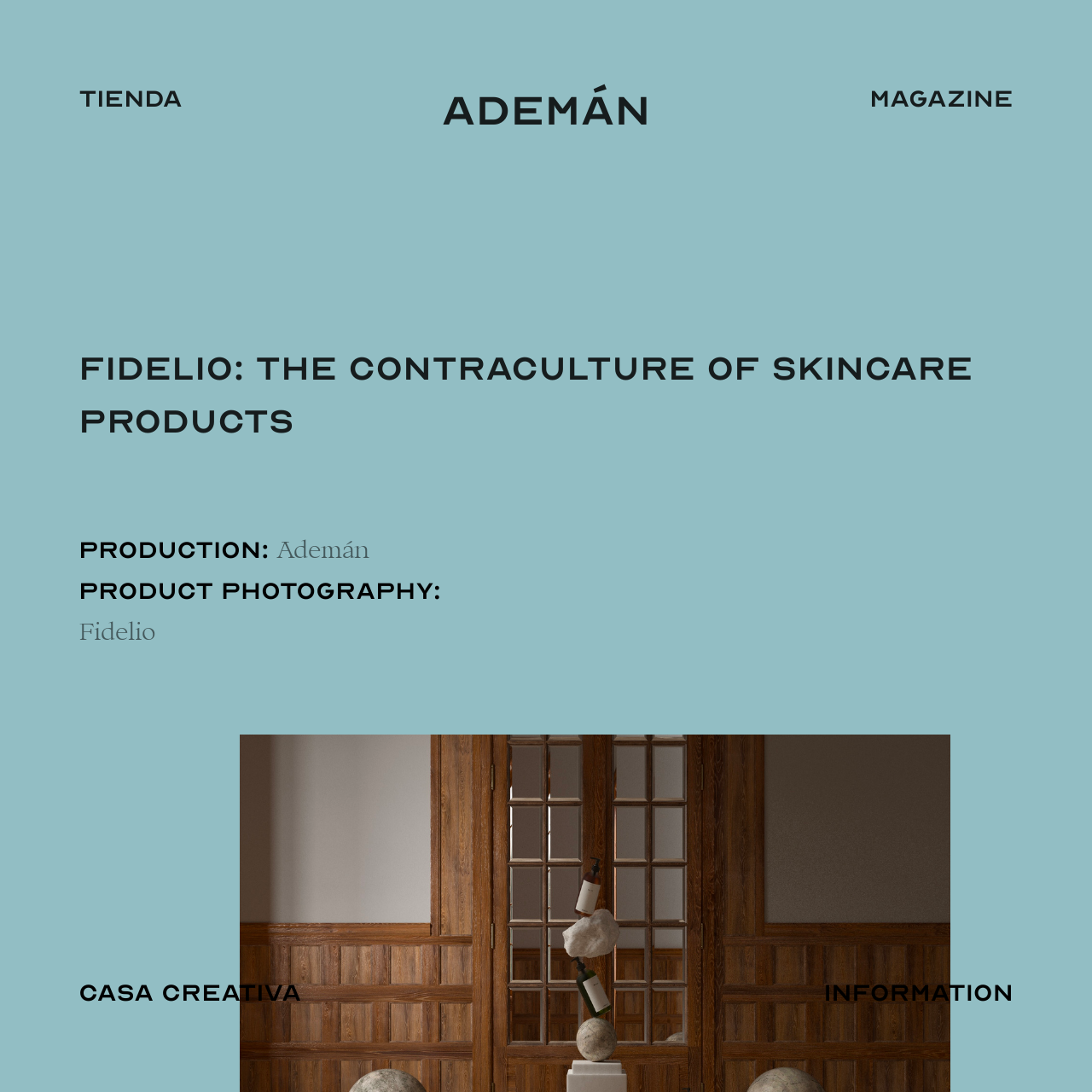
Fidelio: The Contraculture of Skincare products
Inspired by Beethoven's opera of the same name, Fidelio emerges as a prominent skincare brand that challenges traditional gender norms in the realm of skincare.
Founded by the duo of Leonardo Floresvillar and Ricardo Antón Gómez, Fidelio has set a new standard in skincare by embracing the philosophy of gender neutrality and a commitment to entirely natural ingredients and eco-conscious practices.
Nestled in the heart of Guadalajara, Fidelio proudly presents an unwavering commitment to sourcing only the finest local treasures. Indulge in their exquisite range of haircare and skincare essentials, catering primarily to hotels and hospitality establishments.
From their repairing Shampoo to their nourishing Conditioner, invigorating Body Cleanser, revitalizing Exfoliating Hand Wash, and sumptuous Body Lotion, each product encapsulates the essence of the brand's vision. With a resonating motto across their product range - "Be Kind" - Fidelio not only advocates for self-care but also fosters a culture of kindness towards oneself and the planet.
However, Fidelio's dedication to the environment extends beyond their products. They have taken a bold stance against plastic packaging, opting for eco-friendly alternatives. From the manufacturing process to the final shipment, the brand avoids the use of harmful pollutants, ensuring a sustainable skincare experience for their customers.
Their commitment to visual and sensory coherence sets them apart, creating a harmonious experience for users, making Fidelio a counter-culture in the field of skincare products.
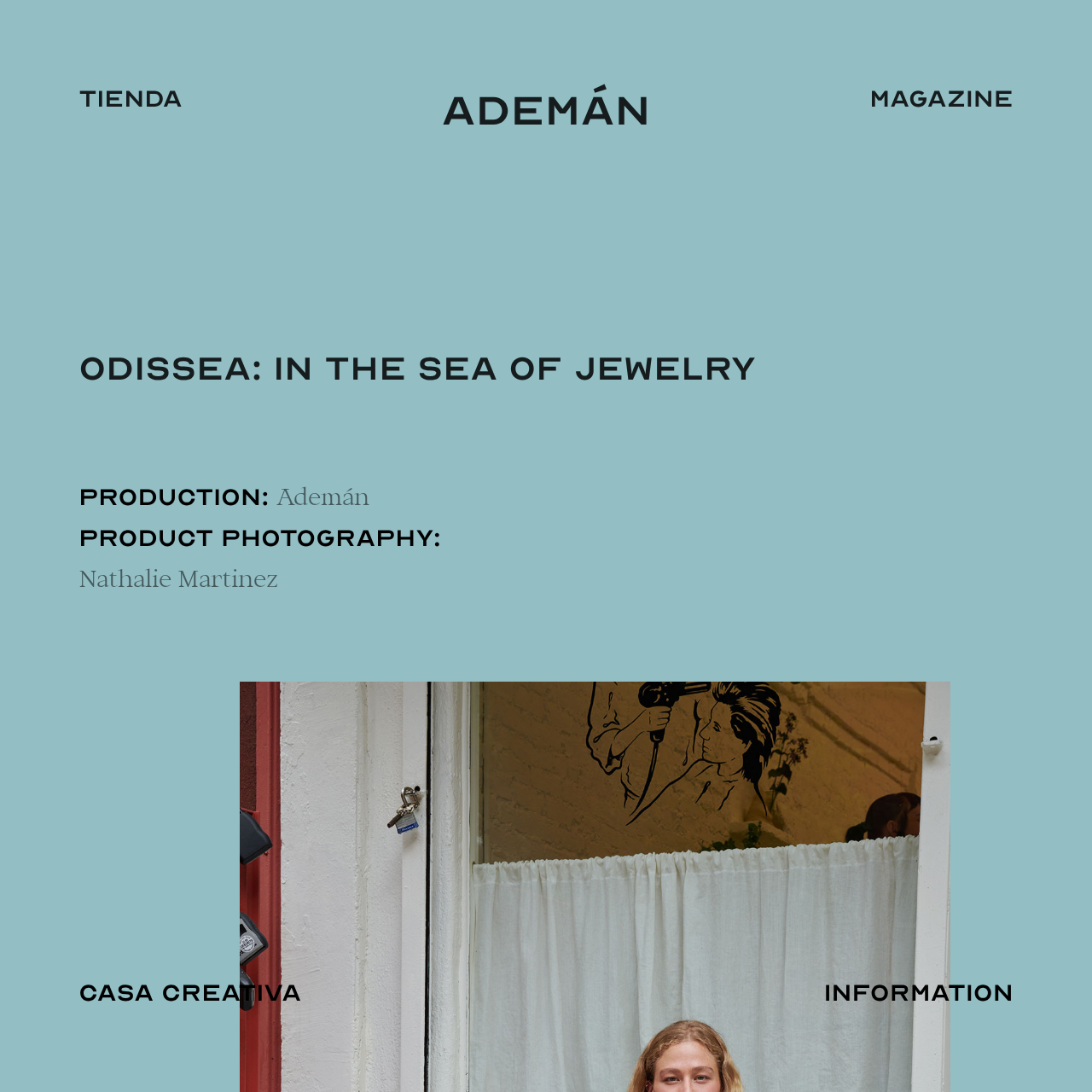
Odissea: IN THE SEA OF JEWELRY
The sea holds no mysteries; it invites us to its beautiful beaches and asks us to preserve them. Then, it gifts us with shields of a complex and unique aesthetic: Odissea's jewelry.
Nathalie Martínez, a Mexican multidisciplinary artist in New York, is connected to the gifts of the sea. Her beach searches turn into a triumphant journey that enriches Odissea's catalog, as she discovers shells that blend sizes, colors, and styles, radiating incomparable beauty. The waves come and go, leaving treasures in her hands.
Her artistic process is a deep journey of creativity and craftsmanship, immersing herself in her connection with the sea to create meticulous Odissea jewelry pieces. Inspired by the vastness of the ocean and the delicacy of seashells, her designs capture wonder and elegance.
With a keen eye for details and an ability to uncover the hidden beauty in the gifts of the sea and the bay, Nathalie selects shells that evoke a unique enchantment. Through her artistic vision and ancestral goldsmithing techniques in Taxco, Mexico, each Odissea creation becomes wearable art, radiating timeless allure.
Her jewelry transcends the ordinary, transforming shells into extraordinary treasures that resonate with those who wear them. It's as if the sea, finally, found the clearest way to communicate through Odissea.
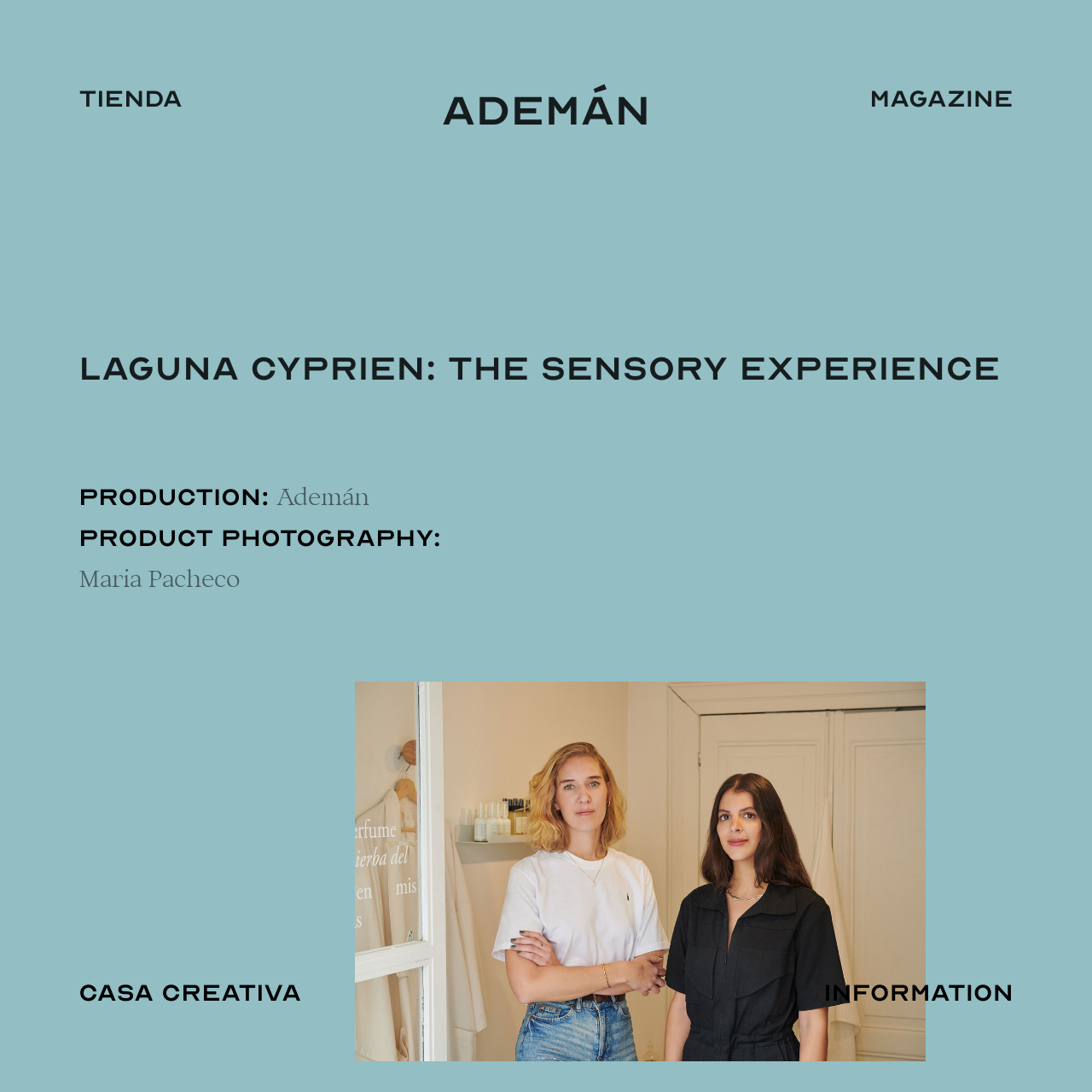
Laguna Cyprien: The Sensory Experience
In today's fast-paced world, it's easy to lose sight of the simple pleasures that make life worth living. But Laguna Cyprien, a Mexican and Swedish female duo, is on a mission to remind us of what truly matters.
At the heart of Laguna Cyprien lies a deep commitment to being conscious, a value that informs every aspect of the brand's hospitality philosophy. From sourcing ingredients to presenting products (all made in Mexico City), every decision is made with an eye towards minimizing environmental impact.
For Laguna Cyprien, hospitality is about creating an elevated guest experience that celebrates a life well-lived. This means cherishing time with loved ones, savoring the flavors of the world, and immersing oneself in nature.
At the same time, Laguna Cyprien embraces the power of minimalism. In a world of endless choices and constant stimulation, the brand reminds us of the beauty and value of simplicity. Every object should serve a purpose and bring meaning to our lives, rather than simply cluttering our space.
In the end, Laguna Cyprien is more than just a brand. It's a lifestyle, a conscious choice to live in harmony with the world around us. Through mindful actions and intentional choices, Laguna Cyprien inspires us to create a more conscious, fulfilling way o f living.
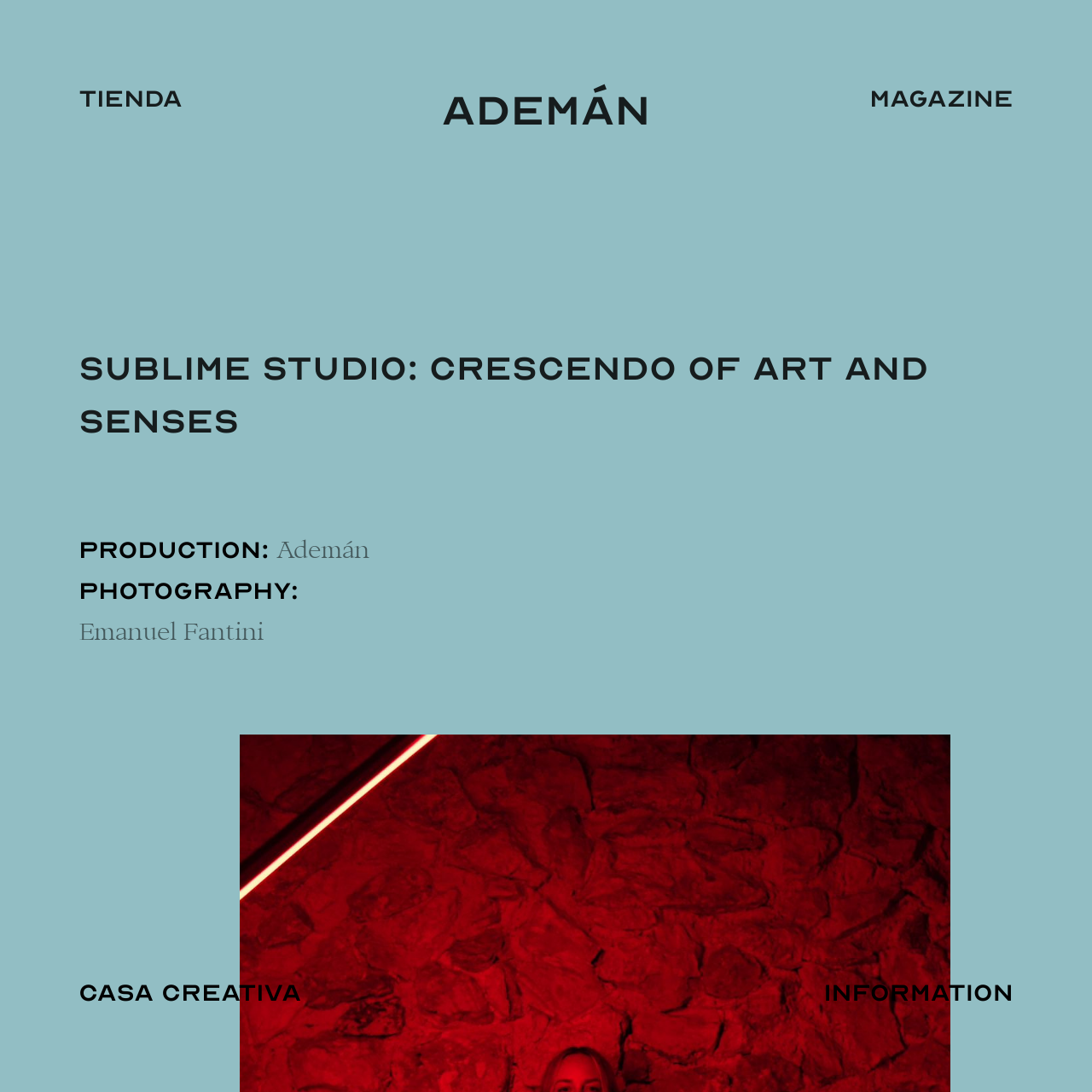
SUBLIME STUDIO: crescendo of art and senses
Walking is a beneficial activity for both the body and the soul. For Stephanie Strom, the creator of Sublime Studio, a leisurely stroll is not just that; it's an opportunity to connect with her unique vision as an individual and as an artist. As she describes it, her inspiration arises from a blend of elements: the flavors of food, the richness of colors, the subtlety of textures, and special moments, like light filtering through windows or illuminating floors and fields. Her creative process is intimately linked to her senses, and it is from this perspective that she breathes life into her artistic furniture.
As she roams the streets of Sweden, where she was born and spent her formative years, Stephanie's introspective journey takes her back to her family roots. Her parents, gifted with artistic talents, demonstrated that creativity ran in their blood.
Her childhood was marked by dualities: her love for acting, theater, and analog photography, skills in which she excelled, intertwined with her family's expectations—namely, the pursuit of a "conventional" job.
In Sweden, the educational system supported students' creativity and talents. This environment allowed her to flourish and excel academically. At the age of 18, with her education in Sweden completed, she made the audacious decision to move to the United Kingdom, initially planning to study psychology.
However, life often unfolds unexpectedly, and Stephanie's plans to study psychology took an unexpected turn during her journey from the United Kingdom to Australia. While she had initially planned to study psychology, her encounter with the prestigious RMIT University in Melbourne led her down a completely different path: that of interior architecture. This bold decision and her tireless dedication led her to graduate with honors, thus laying the foundation for her future career as a prominent furniture artist.
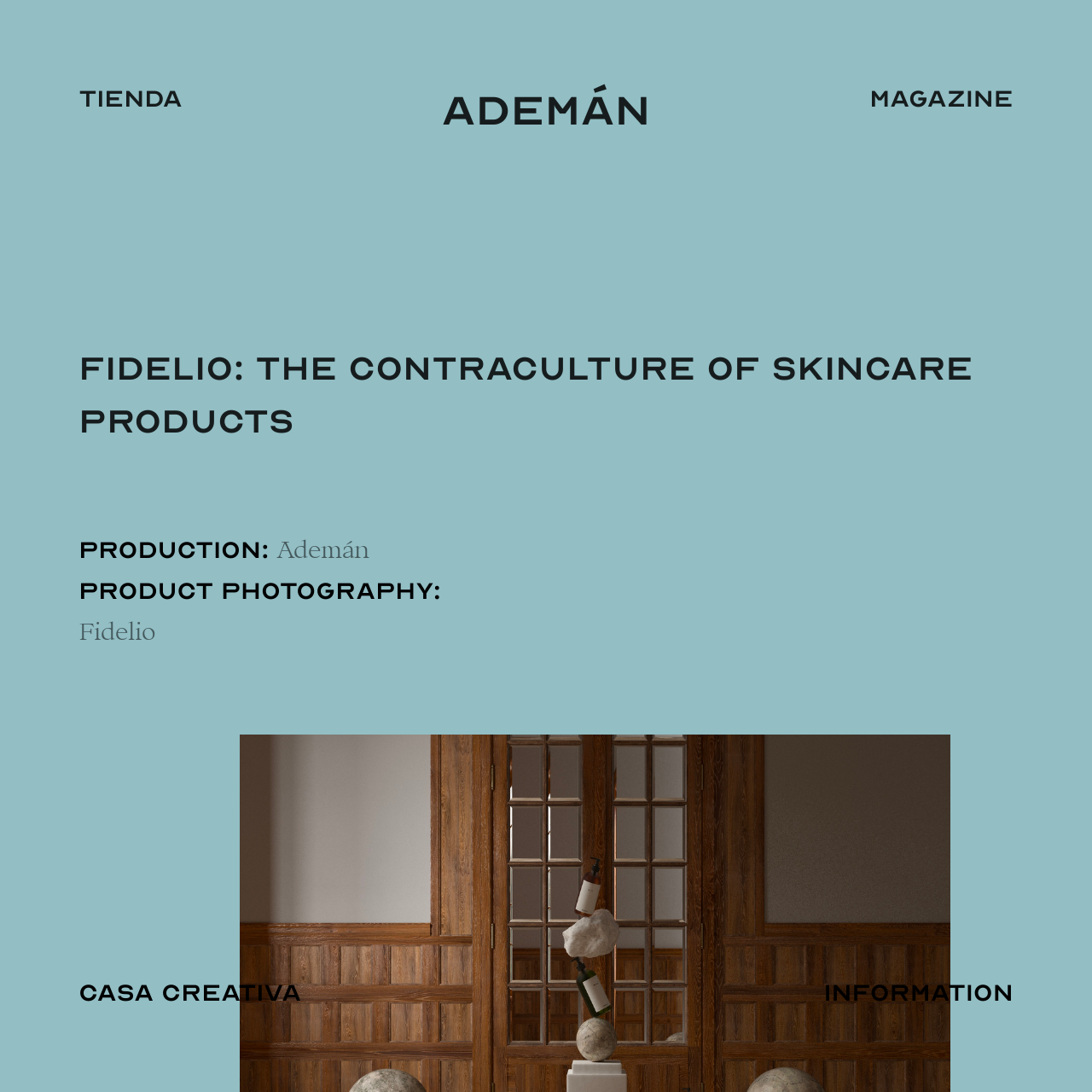
Fidelio: The Contraculture of Skincare products
Inspired by Beethoven's opera of the same name, Fidelio emerges as a prominent skincare brand that challenges traditional gender norms in the realm of skincare.
Founded by the duo of Leonardo Floresvillar and Ricardo Antón Gómez, Fidelio has set a new standard in skincare by embracing the philosophy of gender neutrality and a commitment to entirely natural ingredients and eco-conscious practices.
Nestled in the heart of Guadalajara, Fidelio proudly presents an unwavering commitment to sourcing only the finest local treasures. Indulge in their exquisite range of haircare and skincare essentials, catering primarily to hotels and hospitality establishments.
From their repairing Shampoo to their nourishing Conditioner, invigorating Body Cleanser, revitalizing Exfoliating Hand Wash, and sumptuous Body Lotion, each product encapsulates the essence of the brand's vision. With a resonating motto across their product range - "Be Kind" - Fidelio not only advocates for self-care but also fosters a culture of kindness towards oneself and the planet.
However, Fidelio's dedication to the environment extends beyond their products. They have taken a bold stance against plastic packaging, opting for eco-friendly alternatives. From the manufacturing process to the final shipment, the brand avoids the use of harmful pollutants, ensuring a sustainable skincare experience for their customers.
Their commitment to visual and sensory coherence sets them apart, creating a harmonious experience for users, making Fidelio a counter-culture in the field of skincare products.
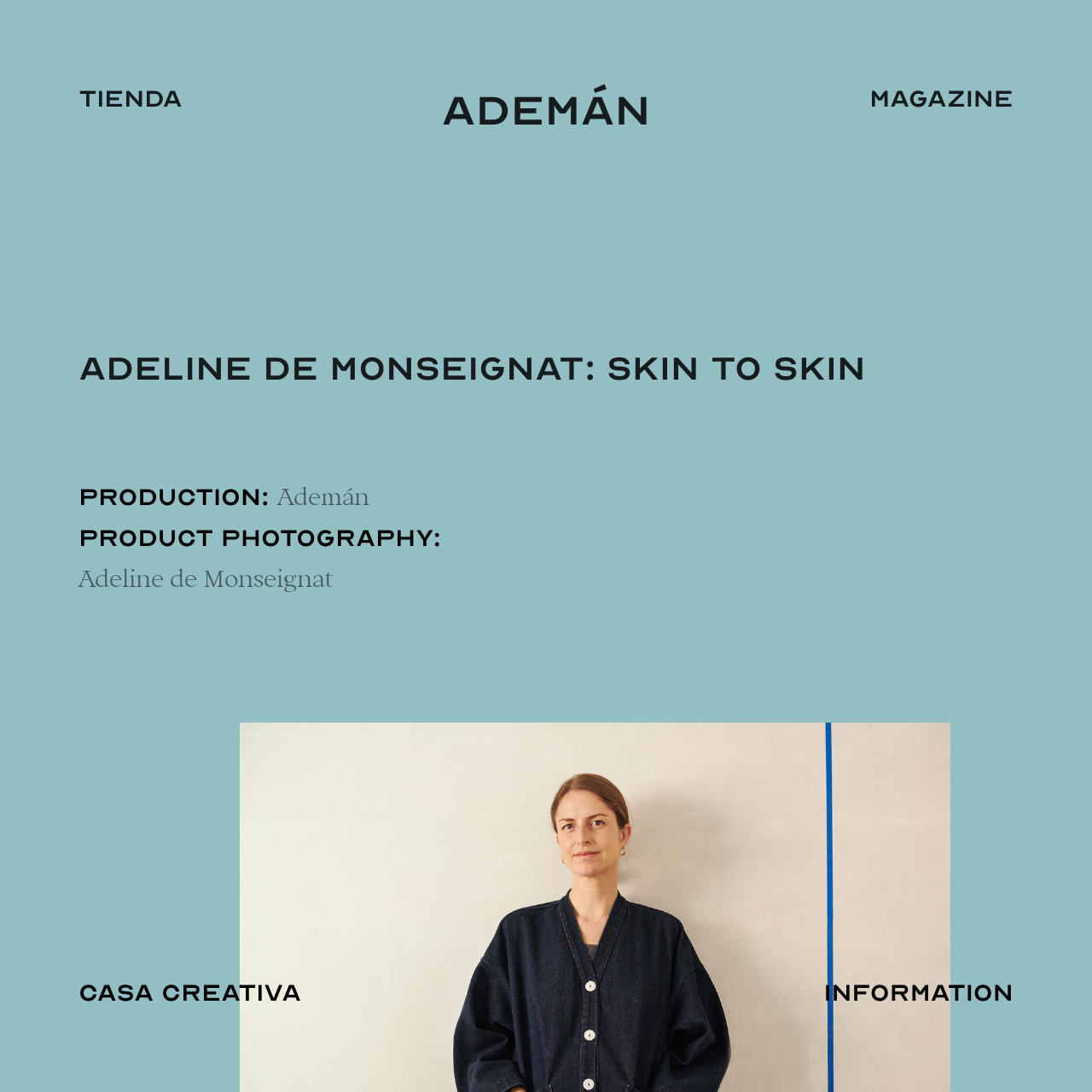
Adeline de Monseignat: skin to skin
For a creative individual, the act of going to sleep could be considered a mere formality to regain energy. For Adeline de Monseignat, a talented Dutch artist who has called Mexico her home since 2017, dreams are not confined to the nocturnal realm; they manifest in her daily life and in the visions of a future that crystallizes artistic goals. Every dawn, she awakens with a fervent passion that drives her to explore various domains as a sculptor, and currently, her exciting exhibition "Skin to Skin" has been captivating Monterrey since September 2023.
"Skin to Skin" is the title of her exhibition, a name that evokes the essence of motherhood and artistic creation in Adeline de Monseignat's mind. Her sculptures and artworks transcend time, transporting us through months of pregnancy, the first month of motherhood, and the deep connection that blossoms between mother and child. This intimate moment, known as 'skin to skin,' where the baby's skin caresses the mother's, is the epicenter of her artistic expression. In the language of medicine, this contact is an anchor of security for the child, an opportunity to explore, smell, and forge a bond that withstands the test of time.
A mother's journey to motherhood begins from the very first moment: nine months of complex dreams about what her child will be like, how the first touch and feeling will be, creating a sense of protection. During this time, she experiences the sensation of being one with her child. However, separation eventually arrives. Adeline de Monseignat, as she holds her child against her chest in a profound act, experiences an overwhelming sense of love that envelops the moment. A desire for fusion, to erase the boundaries between her and her child, recalling that intimate gestation period, emerges. Despite her desire, reality prevails, as the child is a unique entity. These reflections have significantly influenced Adeline de Monseignat's creative journey, leaving an indelible mark on her approach to sculpting materials, where a philosophy of "wabi-sabi," finding beauty in imperfection, is reflected.
In 2017, Adeline de Monseignat brought her artistic talent to Mexico with the intention of exploring the art of stone carving. However, what she found here was much more than a mere sculptural skill. This country captured her heart, triggering a series of events that would transform her life, including her encounter with her husband, the artist Pablo de Laborde Lascaris. 'Skin to Skin' is the culmination of that journey, an effort marked by trial and error, in which she recognizes and embraces the inherent flaws in the process: representing the feeling of what a mother experiences after giving birth. In a video available on her official Instagram (@adelinedemonseignat), Adeline expresses the intimate union of two bodies, one born from the other. In the unwavering quest to minimize the space between them to the absolute minimum. But it fails. This reflective process has left a profound imprint on Adeline de Monseignat's approach to sculpting materials. Her determination to shape, sculpt, and merge one material's surface with another, with the intention of minimizing the distance between them, is her way of confronting her internal struggle.
Ultimately, these sculptural creations do nothing but reflect the complexity of life.
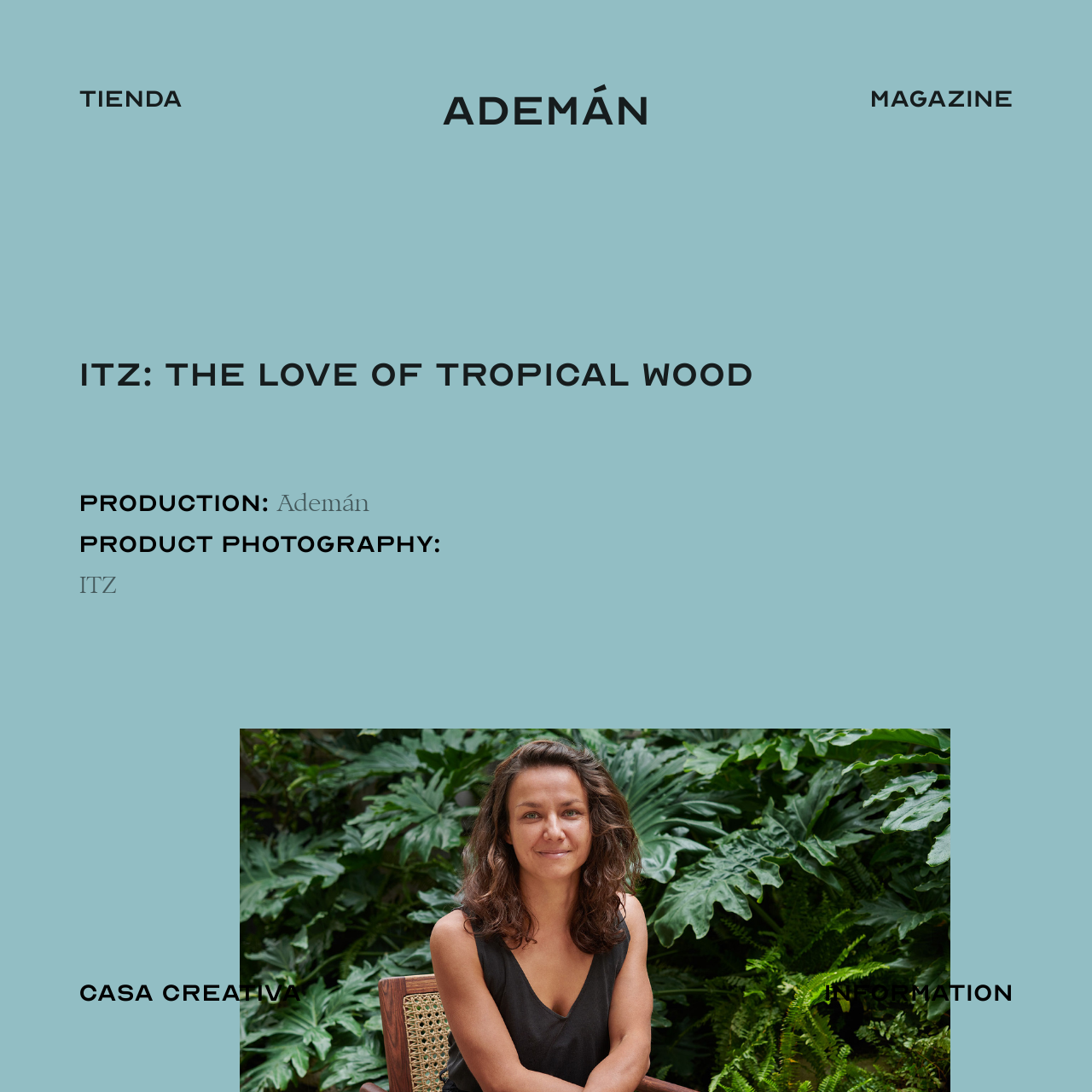
ITZ: THE LOVE OF TROPICAL WOOD
You cannot force an epiphany to happen, but finding yourself deep in the jungle can be conducive to it. It was in the year 2010 when Ania Wolowska was in a town called Bacalar, gazing at what seemed to her the most beautiful lagoon in the world. Attempting to slow down a hectic pace of life, among friends, doing things, in cities like Gdansk and Poznan in Poland, and also Mexico City. Because no one could defend large cities with sufficient evidence and claim they are not unbearable. And for Bacalar, it was enough to have the most beautiful lagoon in the world to trigger the epiphany that made Ania stay in that place. Her life changed forever when she realized she had everything in nature. This marked the beginning of ITZ, a design studio and carpentry workshop based in Bacalar, southeastern Mexico.
Ania found her guides in two Mayan carpenter masters near Bacalar, in a little village called Los Divorciados. They taught her their processes of how wood becomes an object. But more importantly, they taught her to see nature with different eyes, in its purest state: witnessing the lifestyle of the carpenter masters who, deep in the jungle, cultivate all the food they need—fruit, vegetables, corn, and beans. And then, they savor it in their baharaque houses made of wood with palm roofs, absolute farmers who even coexist in harmony with bees that pour honey to sweeten their palate. When the click of nature makes a connection deep within you, it turns the path of work into producing tangible beauty. ITZ, a name with Mayan roots, honors this process: creating ensembles that are both beautiful and strong.
The ITZ workshop has witnessed an evolution that challenges the expectations of local craftsmanship. Sharing her experiences with Ademán, Ania Wolowska tells how they began collaborations with the most outstanding artisans and carpenters in the region. At that time, these skilled workers were not accustomed to creating high-quality products, as they focused on making simple furniture with rustic designs and modest finishes. Ania emphasizes the patience and dedication required to teach them that they could aspire to produce exceptionally high-quality items.
The culmination of this journey resulted in a unique story that, according to Ania, transformed the workshop into a kind of regional trade school. For her, this space goes beyond just being a workshop; it is a source of knowledge and a school of life. Numerous talented young people passed through here, acquired skills in masonry and fine carpentry, and took this knowledge to various parts of Mexico and even the United States.
But the narrative takes an unexpected turn towards the end when Ania shares: 'We are rescuing lost artisanal techniques in the region, such as weaving chairs with the ancient partridge-eye technique, which has almost disappeared.' Beyond being just a workshop, ITZ stands as a custodian of heritage, reviving and preserving forgotten skills.
For Ania, living in the communities of Bacalar and nearby places made time pass in a very different way: everything is calm, and there is no hurry.
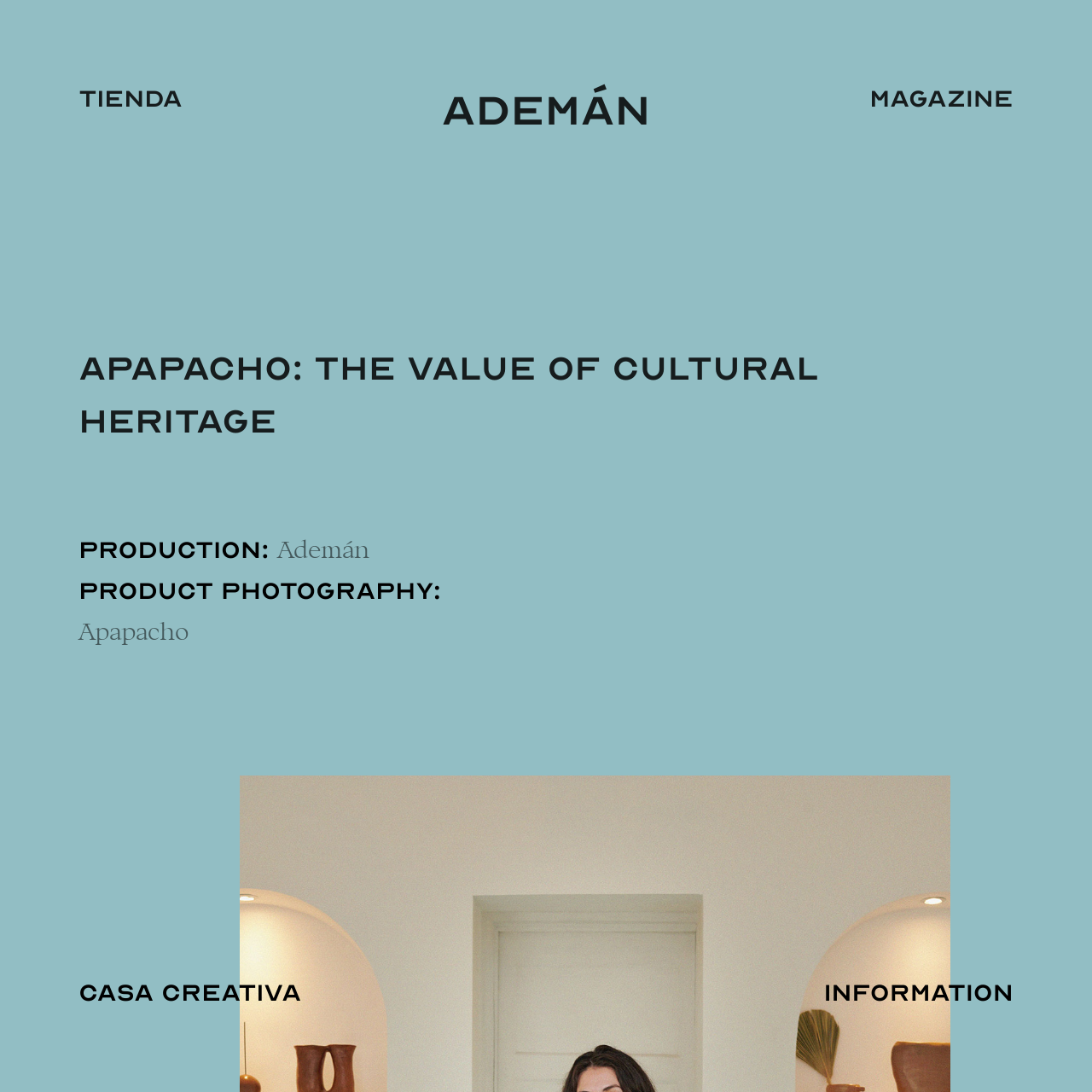
Apapacho: The value of cultural heritage
In the most intimate corner of nature, where the birds sing their most sublime hymns to commence the day, a ray of light penetrates a home with reverence. This intrepid solar messenger reminds us that our existence is inextricably connected to the natural world. Amidst this setting, that very solar arrow highlights one of Apapacho's pieces, capturing the essence of this everyday spectacle.
What is the most fundamental meaning of magic? To create something beautiful from nothing, solely with one's hands, using the materials entrusted to Mexican artisans who craft each of Apapacho's pieces. The name 'Apapacho,' derived from one of the ancestral languages, Nahuatl, conceals within its meaning a profound truth: the surrender of the soul, the giving of everything.
But there's a still moment in the early morning when you forget it all. How much coffee will it take to remember who you are? You make a choice, and the coffee cup becomes Apapacho; touching it imparts a feeling of invincibility, a unique energy that flows from whoever was the creator of this piece. It's not just about the coffee; it's about Apapacho. And the sun is potent, for it's like no other; it's a Mexican sun. You pause for a moment, reflecting on all the artisans in this country who infuse every detail, from the spirit to the earth and all the materials.
To love Mexico is to embark on a poetic journey through its heart and soul, an odyssey that fuels Diana Campos, a native of Mexico City, and Farsh Kanji, a nomadic Canadian, the passionate couple behind Apapacho World. Their voyage, deeply rooted in a profound affection for the Mexican landscape and its rich culture, has been a continuous exploration, a tapestry woven with threads of innovation and reverence for traditions. Beyond a simple journey, it has been a self-discovery, a bridge to a shared vision of beauty that transcends time. Their story, intertwined with Apapacho World, is a testament to the unrelenting pursuit of the Mexican essence that resides in every corner of this vibrant country. Without a doubt, their narrative holds captivating tales yet to be unveiled.
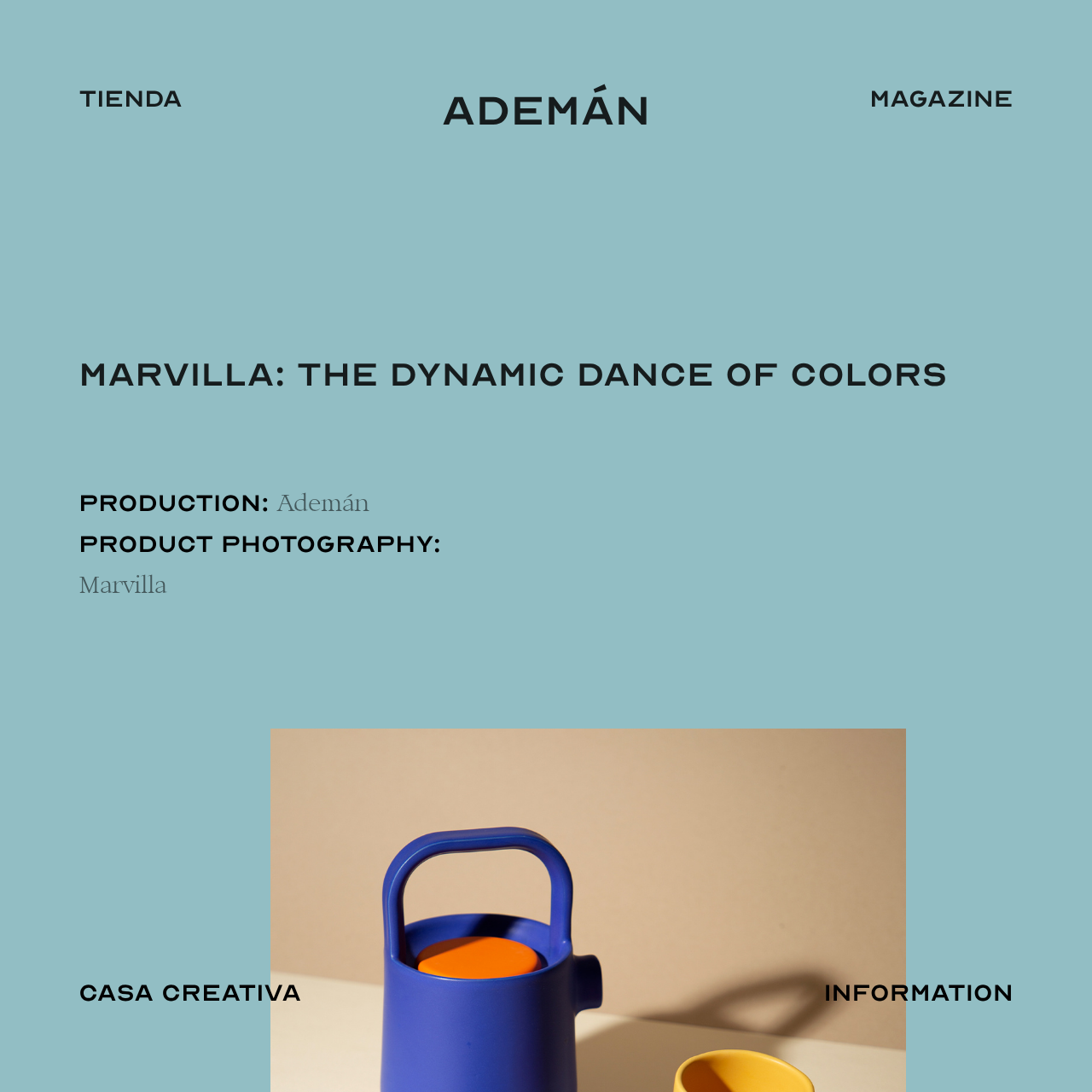
Marvilla: the dynamic dance of colors
In the captivating creative universe, entry into university can be perceived as an exclusive privilege. However, for Mariana Villa, hailing from the enchanting Tepoztlán, Morelos, Mexico, it was much more than a mere privilege. It was a personal challenge, a journey where each step was outlined with determination and steadfastness. When Mariana made the decision to embark on her academic odyssey, she chose the National Autonomous University of Mexico (UNAM), the academic jewel of the country.
This journey was not without challenges; UNAM, being a distinguished public university, presented notable obstacles in its admission process. The discipline of industrial design, in particular, imposed even stricter requirements, limiting acceptance to only sixty students per generation. This highly competitive process marked the beginning of her journey, where each achievement was not a result of chance but of the dedication and passion that Mariana infused into her educational voyage.
In the intricate tapestry of creation, the necessity to decree and craft with one's own hands becomes a pivotal choice. Mariana Villa found herself standing at this crossroads, contemplating whether to tread the path of an artisan or embrace the realm of an industrial designer. As her journey unfolded, she discovered a harmonious balance between both roles, seamlessly merging the worlds of wheel pottery teaching and artistic collaboration.
The canvas of her creativity expanded further as artists sought her expertise to breathe life into their sculptures. In this role, Mariana nurtured the artistic visions of others. Beyond these multifaceted roles, she embarked on establishing her own brand: Marvilla. As the founder, creative director, and designer, Mariana navigated the intricate landscape of entrepreneurship.
Her design philosophy emerged from a profound understanding of the production process, a synthesis of expertise from both artisanal and industrial perspectives. Reflecting on her educational journey, Mariana acknowledged the significance of being schooled in the art of crafting with one's hands. This experiential foundation became a cornerstone, empowering her to lead teams with a nuanced comprehension of what was achievable and technically sound.
In a world where some may rely solely on artisans, Mariana's approach stood out. For her, design was a perpetual conversation with people. The hands-on experience she cultivated became an invaluable asset, a compass guiding her through the intricate realms of design.
In the dynamic realm of pottery, the vibrant pulse of life resonates globally, now more prevalent than ever. What once started as a niche art form has evolved into mainstream culture, with ceramic art capturing the imaginations of many. Mariana Villa embarked on this creative odyssey, pushing the boundaries of tradition and weaving her narrative into the rich tapestry of ceramics.
Her journey unfolded against the backdrop of a world where ceramic workshops were a rare find. Motivated by a desire to modernize this craft, Mariana sought to infuse her unique perspective into the tradition. Rooted in her academic experiences, she delved into exploring the nuances of identity through various forms and shapes.
Mariana's artistic expression is notably influenced by Mexican and Hispanic shapes, evident in the distinctive contours of her pieces. Yet, her design philosophy embraces simplicity and minimalism, encapsulating the essence of "just the necessary lines for it to exist." The magic unfolds in her meticulous approach, where each stroke serves a purpose.
The ceramic medium became Mariana's canvas for innovation during her school years. Designing, molding, and experimenting with an array of glazes, she discovered the transformative power of color. The same design took on diverse characters through the alchemy of glaze—a fascinating journey akin to dressing a concept in different hues.
Contemplating the interplay between shape and color became a central theme in Mariana's creative process. The intriguing question surfaced: what takes precedence, the form or the hue? A dynamic dance unfolded in her mind, sparking a creative interplay that continues to fuel her artistic endeavors.